
how-to
How to Clean Oil Stains Off a Concrete Driveway
Editorial Team · October 9, 2026 · 15 min read
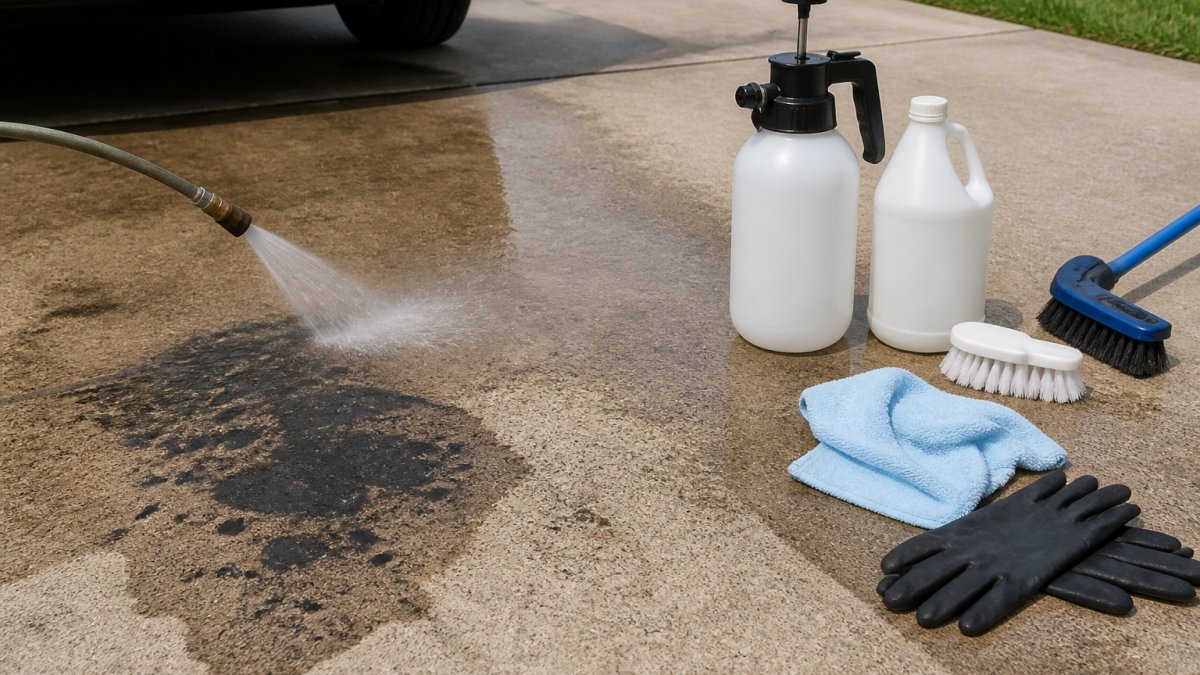
Table of Contents
- Identify Whether Your Oil Stain Is Fresh or Set-In
- How to Clean Fresh Motor Oil Off Concrete
- How to Remove Old Oil Stains From a Concrete Driveway
- Pressure Washing Oil Stains From Concrete
- Consider Concrete Type, Age, and Sealer Compatibility
- Safety and Environmental Precautions
- Prevention and Maintenance
- When to Call a Professional
- Frequently Asked Questions
Last Updated: October 9, 2026
Identify Whether Your Oil Stain Is Fresh or Set-In
First, figure out how old the stain is. Fresh stains respond to simple absorption; set-in stains have penetrated deeper and need stronger treatment.
Fresh oil stains (less than 48 hours old)
Fresh motor oil sits on the surface before soaking into porous concrete, making these stains your best chance at quick, low-effort removal.
They look wet or glossy, feel damp, and smell strong rather than faded.
Why timing matters: Oil begins bonding to concrete fibers within hours. After 24 hours the stain starts to set; by 48 hours it's a much tougher problem.
Set-in oil stains (weeks or months old)
Set-in stains have darkened and hardened as oil penetrates the pores, looking dark brown or black and feeling dry.
They smell fainter because the oil has oxidized, and they need aggressive treatment and longer dwell times.
How to Clean Fresh Motor Oil Off Concrete
Learning how to clean oil stains off a concrete driveway starts with fresh spills, which come off quickly if you absorb the excess before it soaks deeper.
Step 1: Absorb excess oil immediately
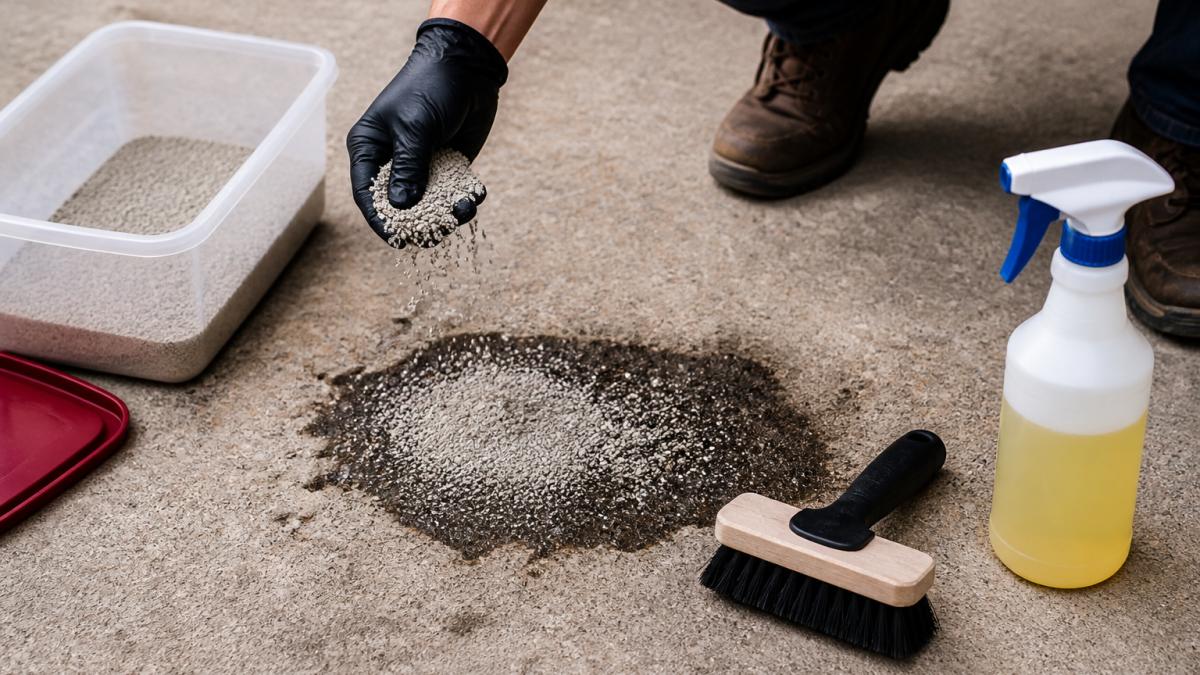
Act within the first few hours. Use an absorbent material to pull oil off the surface.
Best absorbents:
- Kitty litter (non-clumping works best)
- Sawdust
- Sweeping compound
Pour it on, let it sit 15 to 30 minutes, then sweep it up and dispose of it properly. Don't use water yet, it spreads the oil deeper.
Step 2: Apply a cleaning agent
Once the excess is absorbed, apply a degreaser or detergent; dish soap and hot water work for light stains.
For fresh stains, try:
- Dish soap and hot water
- All-purpose degreaser
- Concrete cleaner
Apply directly and let it sit 10 to 15 minutes to break down residue.
Step 3: Scrub and rinse
Scrub with a stiff-bristle or nylon brush in circular motions for 2 to 3 minutes.
Rinse thoroughly with a garden hose. Repeat if needed, most fresh stains disappear after one or two applications.
How to Remove Old Oil Stains From a Concrete Driveway
Understanding how to clean oil stains off a concrete driveway requires different tactics for old stains, which demand stronger treatment. The oil has bonded to the concrete and requires a more powerful degreaser and longer dwell time.
Step 1: Choose the best degreaser for concrete oil stains
Not all cleaners work equally on set-in stains. You need a product designed to break down embedded oil residue.
Strong options include:
- Oil-specific degreasers (designed for motor oil)
- Concrete degreasers (formulated for porous surfaces)
- Alkaline cleaners (cut through stubborn oil)
Confirm on the label that it's safe for concrete and won't damage your sealer, and test a small area first.
Step 2: Apply degreaser as a thick paste
For set-in stains, mix the degreaser with water into a thick paste and apply generously.
Cover the whole stain thick enough to stay in place, a thin application dries too fast to penetrate the residue.
Step 3: Allow dwell time and repeat if needed
Dwell time is critical: leave the degreaser on 24 to 48 hours to break down oil embedded deep in the concrete.
After dwell time, scrub with a stiff brush. Use moderate pressure. Rinse thoroughly with water or a garden hose.
If the stain remains, repeat, set-in stains often need two or three applications. Patience beats force.
Pressure Washing Oil Stains From Concrete
A pressure washer is a rinse tool, not a stain remover. Water alone can't break the oil-concrete bond and drives emulsified oil deeper, so use it only as the final step after a degreaser does the chemical work.
Why water alone does not remove oil
Concrete is a network of capillaries, and nonpolar motor oil clings to the calcium silicate surface instead of dissolving in water. A pressure washer shears away loose oil, but oil bonded inside the pores stays put, and the spray can push surface oil deeper. That's why the sequence matters: absorb, apply degreaser, dwell, agitate, then rinse.
Match the nozzle, pressure, and distance to the job
- Nozzle: Use a 25-degree or 40-degree fan tip. Never use a 0-degree red tip on concrete, it etches lines and can pit the surface.
- Pressure: Keep a residential electric unit in the 1,200 to 2,000 PSI range. Gas units rated 2,500 to 3,000 PSI should be turned down or fitted with a wider tip. Above roughly 2,000 PSI you risk scarring, especially on decorative or aged concrete.
- Distance: Hold the wand 12 to 18 inches from the surface. Closer increases impact force and the chance of damage; farther reduces cleaning power.
Step-by-step rinse sequence
- Confirm the degreaser has finished its dwell time and the stain is soft or lifted.
- Pre-wet surrounding concrete so runoff does not dry and leave a ring.
- Start at the outer edge of the stain and work inward so you do not spread oil outward.
- Use overlapping passes, keeping the nozzle at 12 to 18 inches and 45 degrees.
- Rinse the whole treated area, then inspect after it dries, oil stains look darker when wet, so judge results on dry concrete.
- Repeat the degreaser-and-rinse cycle rather than increasing pressure.
When to skip the pressure washer entirely
- Old or cracked concrete: Existing cracks widen under spray, and water forced into them can undermine the slab base.
- Decorative or stamped concrete: High pressure erodes the release agent and color hardener, leaving a dull patch.
- Sealed concrete: A wand held too close strips the sealer, which then lets oil penetrate faster next time.
Runoff and disposal
Oil-laden runoff is the part most guides skip. Don't let it flow into a storm drain, gutter, or planting bed, storm drains usually discharge untreated to creeks, rivers, or lakes, and many municipalities treat illegal discharge as a violation. Options:
- Block the driveway apron with sandbags or a rubber berm so runoff pools on the slab.
- Vacuum or squeegee the pooled water into a bucket.
- Let solids settle, then dispose of the oily water at a household hazardous waste facility or auto parts store that accepts used oil.
Consider Concrete Type, Age, and Sealer Compatibility
Two driveways poured the same year can respond to the same degreaser very differently. The variables that matter most are porosity, sealer presence and type, and whether the concrete is plain, colored, or stamped. Get these wrong and you either waste a cleaner that can't penetrate or etch a finish you can't restore.
First, figure out whether your concrete is sealed
Sealer changes how a cleaner behaves. Test it before you buy anything:
- Water bead test: Drip a half-cup of water on the slab. If it beads and rolls, the concrete is sealed. If it darkens and soaks in within a minute or two, it is unsealed or the sealer has worn through.
- Visual check: Sealed concrete has a uniform sheen or slight gloss. Unsealed concrete looks flat and chalky.
- Scratch test: In an inconspicuous spot, drag a key lightly. Sealed surfaces tend to scratch as a film; unsealed surfaces dust.
How sealer type changes your cleaner choice
- Acrylic or water-based sealer: The most common residential type. Solvent-heavy degreasers and alkaline cleaners above roughly pH 11 can cloud or strip it. Start with a pH-neutral or mild detergent and a nylon brush.
- Polyurethane or epoxy sealer: More chemical-resistant but still vulnerable to acetone, xylene, and strong caustics. Avoid solvent-based products unless the label says they are safe for the specific coating.
- Penetrating silane or siloxane sealer: Sits inside the pores rather than on top. It tolerates more cleaners but offers less oil resistance, so stains still penetrate, you just have more time before they set.
Porosity and age: what actually changes
- New concrete (under 1 year): Still curing and releasing moisture. Avoid acidic cleaners and seal it only after the manufacturer's recommended cure window, often 28 days or longer. Oil stains on green concrete can be stubborn because the surface is still tight.
- Concrete 1 to 10 years old: The sweet spot. Pores are open enough for degreasers to work, and the surface is still sound.
- Concrete 10 to 20 years old: Microcracks and surface wear increase absorption. Expect longer dwell times and possibly a second cycle.
Plain, colored, and stamped concrete
- Plain gray concrete: Most forgiving. Standard degreasers and stiff nylon brushes are fine.
- Integrally colored concrete: The pigment runs through the slab, so surface cleaning is generally safe, but acidic cleaners can dull the tone over repeated use.
- Stamped or stamped-and-stained concrete: The color often sits in a surface-applied stain or release agent. Solvents, wire brushes, and high pressure can strip it. Use a soft brush and a cleaner labeled safe for decorative concrete.
A quick decision path
- Run the water bead test. Sealed or unsealed?
- If sealed, identify the sealer type or use the mildest option first.
- Match cleaner strength to porosity and age: gentler on new, sealed, or decorative; stronger on old, unsealed, plain concrete.
- Test on a hidden patch for 24 hours.
- Adjust dwell time, longer on older, more porous slabs; shorter on sealed or decorative ones.
Safety and Environmental Precautions
Cleaning products and pressure washers carry real risks, protect yourself and the environment.
Personal safety:
- Wear gloves when handling degreasers and cleaners
- Use eye protection if pressure washing
- Ensure good ventilation if using chemical cleaners
Environmental protection:
- Keep cleaners and oil runoff away from storm drains
- Don't let oily water enter landscaping or gardens
- Dispose of oil-soaked absorbent materials properly (check local regulations)
For your driveway:
- Test new cleaners on a small, hidden area first
- Avoid cleaners that will damage any sealer on your concrete
- Don't use pressure above 2,000 PSI on residential concrete
Prevention and Maintenance
The best stain is one that never happens. Regular maintenance keeps your driveway cleaner and extends its life.
Prevent oil stains:
- Place cardboard or newspaper under vehicles during maintenance
- Fix leaking engines promptly
- Park in a garage when possible
Routine maintenance:
- Sweep your driveway regularly to remove debris
- Rinse it with a garden hose monthly
- Seal your concrete every 2 to 3 years if it's unsealed
When to reseal: Resealing protects concrete from oil penetration. If your driveway is unsealed or the sealer has worn away, resealing reduces how quickly fresh oil stains set in and makes future cleaning easier.
A few minutes of attention when a spill happens saves hours of scrubbing weeks later.
When to Call a Professional
Some stains are too stubborn for DIY methods. Knowing when to call for help saves time and frustration.
- The stain covers a large area (more than 10 square feet)
- It's been there for months or years
- DIY methods haven't worked after multiple attempts
Professional cleaning services use industrial-strength degreasers and equipment, understand how different concrete types respond, and remove stubborn oil residue without damaging your driveway.
Osborne Exterior Property Solutions provides professional pressure washing and specialized cleaning for residential and commercial properties.
Frequently Asked Questions
Does bleach remove oil stains from concrete?
Bleach is not effective for oil stains. Bleach targets organic stains and mildew, not oil residue. For concrete oil stains, use a degreaser or oil remover specifically formulated to break down motor oil and other petroleum products. Dish soap mixed with water works for light oil residue, while stubborn stains require a commercial degreaser left to dwell for several hours.
How long should degreaser sit on an oil stain?
Dwell time depends on stain severity. Fresh oil stains may need 30 minutes to 2 hours. Set-in stains typically require 4 to 8 hours or overnight. Check the degreaser label for recommended dwell time. After the waiting period, scrub with a stiff-bristle or nylon brush, then rinse thoroughly. For embedded stains, repeat the process rather than extending dwell time excessively.
Can you use a pressure washer to remove oil stains from concrete?
Pressure washing alone cannot remove oil stains because water does not break down oil. However, pressure washing works well after applying a degreaser and allowing dwell time. High pressure can also damage unsealed or aging concrete, so use moderate pressure (1500-2500 PSI) and test on an inconspicuous area first. For sealed concrete, pressure washing may strip the sealer, requiring reapplication afterward.
What is the best degreaser for concrete oil stains?
The best degreaser depends on stain age and severity. Commercial oil removers and concrete degreasers are most effective for set-in stains. For fresh stains, dish soap diluted in water works adequately. Enzymatic degreasers break down oil naturally and are environmentally friendly. Always follow label instructions, wear gloves and eye protection, and ensure proper ventilation. Test any cleaner on a hidden area first to confirm compatibility with your concrete sealer.
Ready to restore your driveway? Contact Osborne Exterior Property Solutions for a free quote. We'll assess your specific situation and recommend the best approach to remove oil stains and keep your concrete looking clean.