
how-to
How to Remove Mildew from Driveway: 2026 Guide
Editorial Team · October 7, 2026 · 14 min read
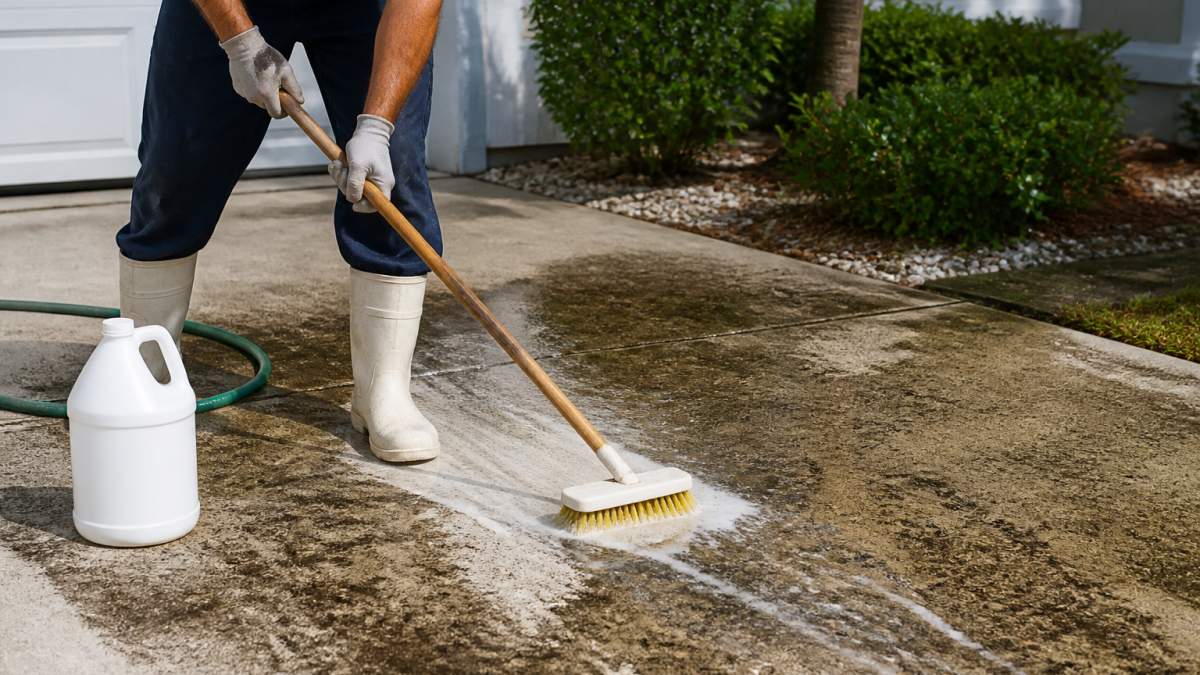
Table of Contents
- How to Remove Mildew from Driveway: Step-by-Step
- Spotting Mildew, Algae, and Other Concrete Stains
- Choosing the Best Concrete Cleaner for Mold and Mildew
- Applying Cleaner and Rinsing Your Driveway
- How to Pressure Wash a Concrete Driveway Without Damage
- How to Prevent Mildew on Driveway Surfaces
- Safety, Plants, Pets, and Storm Drains
- When to Call a Professional for Mildew Removal
- Frequently Asked Questions
Last Updated: October 7, 2026
How to Remove Mildew from Driveway: Step-by-Step
Learning how to remove mildew from driveway surfaces starts with the right mix, the right dwell time, and a thorough rinse.
Mildew is a thin layer of fungus that feeds on damp concrete. It shows up as black, gray, or greenish patches.
Here's the good news: you can remove mildew with supplies you likely already own.
Below, we'll show you exactly how to do it safely, plus how to keep mildew from coming back.
What You'll Need Before You Start
Gather these items before you begin:
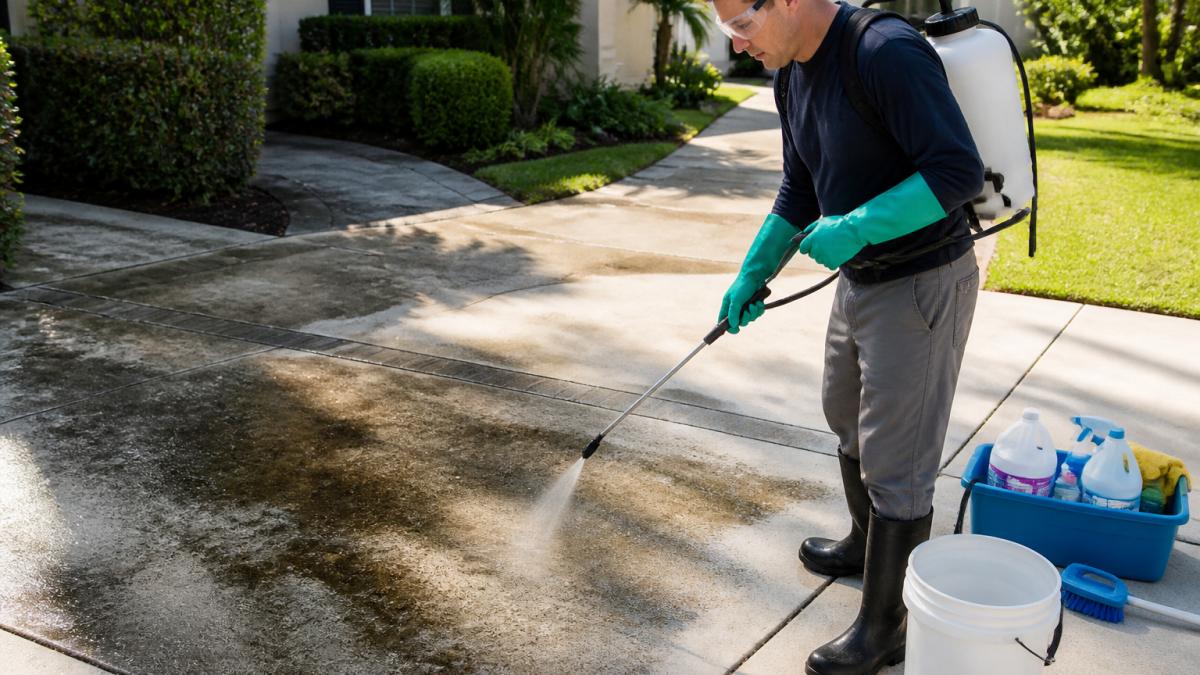
- A pump garden sprayer or a sturdy spray bottle
- A stiff-bristle scrub brush or push broom
- Household bleach or white vinegar
Total time: 45 to 90 minutes for an average two-car driveway.
Difficulty: Beginner to moderate.
Check the weather first. Pick a calm, overcast day. Direct sun dries the solution before it can work.
Spotting Mildew, Algae, and Other Concrete Stains
Mildew on concrete is a surface fungus that grows in damp, shaded spots and appears as powdery black or gray patches.
Why does the difference matter? Because each stain needs a different approach. Bleach kills mildew. Vinegar works well on light algae.
Here's how to tell them apart:
- Mildew: black, gray, or white patches. Powdery when dry. Often near the edges and shaded areas.
- Algae: green or blue-green. Slick and slippery when wet. Common in humid climates.
- Dirt and grime: brown or gray film. Even coverage. No fuzzy or powdery texture.
Run a small test area first. Spray a little solution on a hidden spot and wait 10 minutes.
Choosing the Best Concrete Cleaner for Mold and Mildew
The best concrete cleaner for mold and mildew depends on two things: how severe the growth is, and what condition your concrete is in. A diluted bleach solution handles heavy black growth. Vinegar and water work well for light, routine cleaning. Purpose-made cleaners earn their cost on embedded stains and delicate surfaces.
Both household options are cheap and effective. Here's how to choose.
Diluted Bleach Solution
Mix one part household bleach with two parts water in your sprayer. Add a few drops of dish soap to help it cling to the surface.
Bleach kills mildew spores on contact. It also brightens gray concrete. Use it for heavy black patches and shaded areas that stay damp.
Keep these points in mind:
- Never mix bleach with vinegar, ammonia, or any acid-based cleaner. The reaction releases toxic gas. If you've already applied vinegar, rinse the surface and let it dry before switching to bleach.
- Never mix bleach with other cleaning products "to make it stronger." More chemicals do not mean more cleaning power, they mean more risk.
- Wear gloves and eye protection, and keep the area ventilated if you're working near a garage.
The CDC guidance on cleaning and disinfecting safely covers safe bleach handling in plain terms.
Vinegar and Water
For light mildew and routine upkeep, mix equal parts white vinegar and water. This 50/50 mix is gentle on concrete and safe around most plants.
Vinegar works slower than bleach. Let it sit for 10 minutes before you scrub. It's a good pick for monthly touch-ups and small spots.
One caution: vinegar is acidic. On older, porous, or unsealed concrete, repeated use can slowly etch the surface.
Commercial Concrete Cleaners
Purpose-made cleaners cost more, but they're formulated for specific problems, rust, oil, efflorescence, or heavy organic growth. Read the label and match the product to the stain. Many are oxygen-based rather than chlorine-based, which makes them safer around plants and less likely to discolor colored concrete.
Matching the Solution to Your Concrete
Not all driveways respond the same way to the same cleaner. Before you commit to a full treatment, consider:
- New concrete (under a year old): Cure time matters. Avoid harsh acids and strong bleach until the slab has fully cured, usually around 28 days minimum for basic curing, longer in cool weather.
- Old or porous concrete: It absorbs liquid fast. Use gentler solutions and shorter dwell times to avoid driving chemicals deep into the slab.
- Sealed concrete: The sealer is the protective layer. Abrasive scrubbing and strong chemicals wear it down. Use a cleaner labeled safe for sealed surfaces.
Quick comparison:
| Solution | Best For | Dwell Time | Watch Out For |
|---|---|---|---|
| Diluted bleach | Heavy black mildew | 5-10 minutes | Toxic fumes, plant damage, color fade |
| Vinegar and water | Light mildew, upkeep | 10 minutes | Slower results, acid etch on old concrete |
| Commercial cleaner | Stubborn embedded stains | Per label | Cost, chemical strength |
Run a small test area first. Spray a little solution on a hidden spot and wait 10 minutes. If the stain lightens without dulling or discoloring the concrete, you've found your match.
Applying Cleaner and Rinsing Your Driveway
Apply your solution with a garden sprayer for even coverage. Work in sections, starting at the top and moving downhill. Let the cleaner dwell for 5 to 10 minutes so it can dissolve the mildew.
Then scrub the stains with a stiff brush. Rinse thoroughly with a hose until the water runs clear.
A few tips make this step easier:
- Spray a small test area first to check results.
- Keep the surface wet. Don't let the solution dry in the sun.
- Scrub in circles over embedded stains.
Skip the rinse and the residue stays behind. That residue can dull the concrete and attract new growth.
How to Pressure Wash a Concrete Driveway Without Damage
Pressure washing removes mildew fast, but the wrong settings can etch lines into concrete that never come out. The difference between a clean driveway and a damaged one comes down to pressure, nozzle choice, distance, and technique.
Pressure Settings That Won't Damage Concrete
Residential pressure washers typically run between 2,000 and 4,000 PSI. For most concrete driveways, staying in the 2,000 to 3,000 PSI range with the right nozzle is enough to lift mildew without scarring the surface.
If your machine has adjustable pressure, start low and increase only if the mildew isn't lifting. You can always add pressure, you can't undo an etch mark.
Nozzle Choice
Nozzle color tells you the spray angle:
- 0-degree (red): Never use on concrete. It concentrates force into a pinpoint and cuts grooves.
- 15-degree (yellow): Aggressive. Reserve for tough stains on sound, unsealed concrete.
- 25-degree (green): The general-purpose choice for driveways. Good balance of cleaning power and control.
Start with a 25-degree tip. Move to 15-degree only for stubborn spots, and keep the wand moving.
Distance and Technique
Hold the wand 12 to 18 inches from the surface. Closer means more force; farther means less.
Work in smooth, overlapping strokes, about 50 percent overlap between passes. Move at a steady pace.
Start at the top of the driveway and work downhill. This pushes dirty water away from the cleaned area instead of back across it.
Hot Water vs. Cold Water
Hot water boosts cleaning power. Many machines offer a hot-water setting that lifts mildew faster than cold water alone, which means you can use less pressure to get the same result. If your machine only runs cold, compensate with a slightly longer dwell time on your cleaning solution before you start the pressure pass.
Adjusting for Older, Cracked, or Sealed Concrete
Older or cracked concrete needs a lighter touch. High pressure can widen existing cracks, chip edges, and blow out loose aggregate. Lower the pressure, use a wider nozzle, and increase your distance.
Sealed concrete is a different problem. Pressure washing can strip the sealer, leaving the surface unprotected and more prone to staining. Use the lowest effective pressure, or skip pressure washing entirely and clean with a solution and a soft brush.
When to Soft Wash Instead
If your driveway has delicate landscaping nearby, or the concrete is old, sealed, or decorative, a soft wash may be safer. Soft washing uses low pressure and cleaning solution instead of force. The solution does the work; the water just rinses. At Osborne Exterior Property Solutions, our licensed and insured team offers soft washing for surfaces that can't take high pressure.
How to Prevent Mildew on Driveway Surfaces
Preventing mildew on your driveway comes down to one thing: keep it dry and clean. Mildew needs moisture and shade to grow. Remove those and it struggles to return.
Try these habits:
- Rinse the driveway every few weeks, especially in humid months.
- Trim back trees and shrubs that shade the surface.
- Fix drainage issues so water doesn't pool.
A quick rinse after rain season helps too. It washes away spores before they settle in.
Safety, Plants, Pets, and Storm Drains
Chemicals that kill mildew can also harm plants, pets, and waterways. Protect all three before you spray, and you avoid costly mistakes later.
Follow these rules:
- Wear gloves, eye protection, and closed-toe shoes.
- Cover or rinse nearby plants before and after spraying.
- Keep pets inside until the surface is dry.
The EPA guidance on managing runoff and protecting waterways explains why storm drain protection matters.
For large driveways or HOA common areas, the runoff risk grows. A professional crew knows how to contain and dispose of wastewater safely.
When to Call a Professional for Mildew Removal
Call a professional when mildew covers a large area, keeps returning, or sits on delicate surfaces. Pros have the tools, the safety gear, and the know-how to clean without damage.
Signs it's time to hire out:
- Mildew returns within weeks of cleaning
- The stain covers more than half the driveway
- Your concrete is cracked, old, or fragile
At Osborne Exterior Property Solutions, we've handled exterior cleaning for homes, businesses, and HOA communities for 25 years. Our team offers pressure washing, soft washing, and junk removal as part of our one-stop exterior care.
If you manage several properties, we can handle pressure washing and cleanup across all of them. No need to call around to different vendors.
Frequently Asked Questions
Is bleach or vinegar better to kill mildew on a driveway?
Bleach works faster on deep mildew and black mold because it kills spores on contact. Vinegar is safer for plants and pets and handles light surface mildew. For heavy growth, use a diluted bleach solution (1 part bleach to 10 parts water). For routine cleaning, a 50/50 vinegar and water mix works well. Always test a small area first.
What is the best concrete cleaner for mold and mildew?
A diluted household bleach solution is the most effective DIY option for mold and mildew on concrete. Commercial concrete cleaners with bleach or oxygenated bleach also work well. For stubborn embedded stains, apply the cleaner, let it sit 10 minutes, scrub with a stiff brush, then rinse thoroughly. Always follow label directions and wear protective gear.
Can pressure washing damage my driveway if done incorrectly?
Yes. Using too much pressure or holding the nozzle too close can etch concrete, strip sealant, and blast away the top layer. For concrete driveways, keep pressure under 3,000 PSI and use a 25-degree or 40-degree tip. Hold the wand at a consistent distance and keep it moving. For mildew, a lower-pressure soft wash with cleaner is often safer and more effective than high pressure alone.
How often should I clean my driveway to prevent mildew buildup?
In humid climates like South and Central Florida, clean your driveway every 6 to 12 months. If you notice dark spots or a slippery film, clean right away. Regular cleaning removes organic matter that mildew feeds on. Trimming nearby trees and improving drainage also reduces moisture and slows mildew growth between cleanings.
Mildew on concrete is stubborn, and DIY cleaning only goes so far. When stains keep coming back or the job is too big to handle safely, it's time for professional help. Osborne Exterior Property Solutions brings 25 years of experience, licensed and insured crews, and a full range of exterior services, including pressure washing, soft washing, and junk removal. Get a free quote from Osborne Exterior Property Solutions and restore your driveway's clean, bright look.